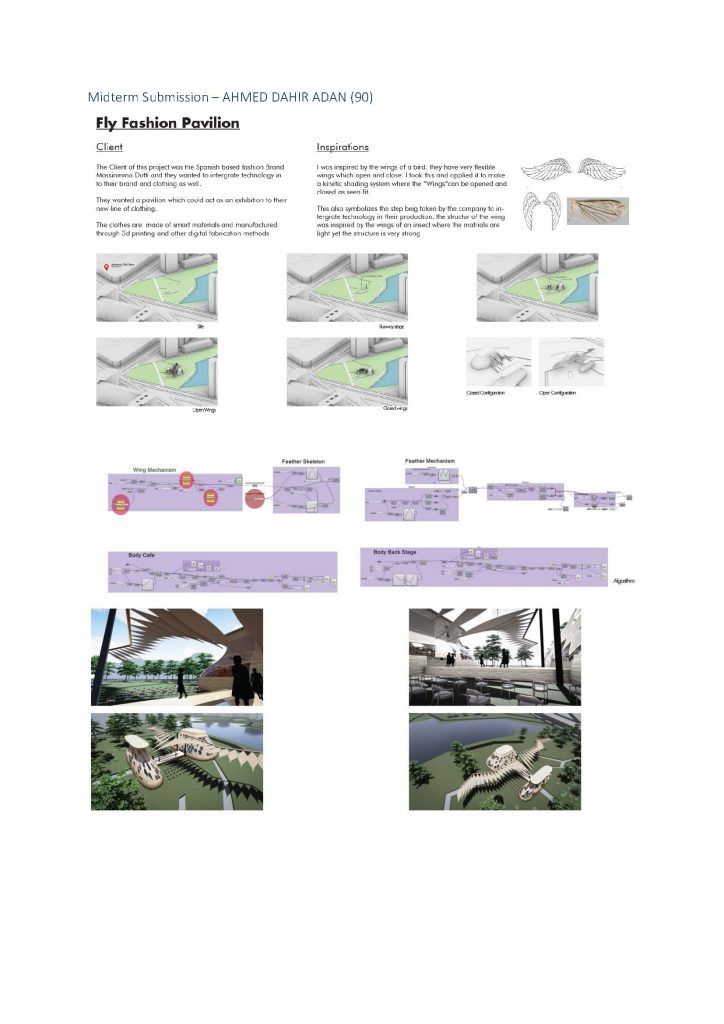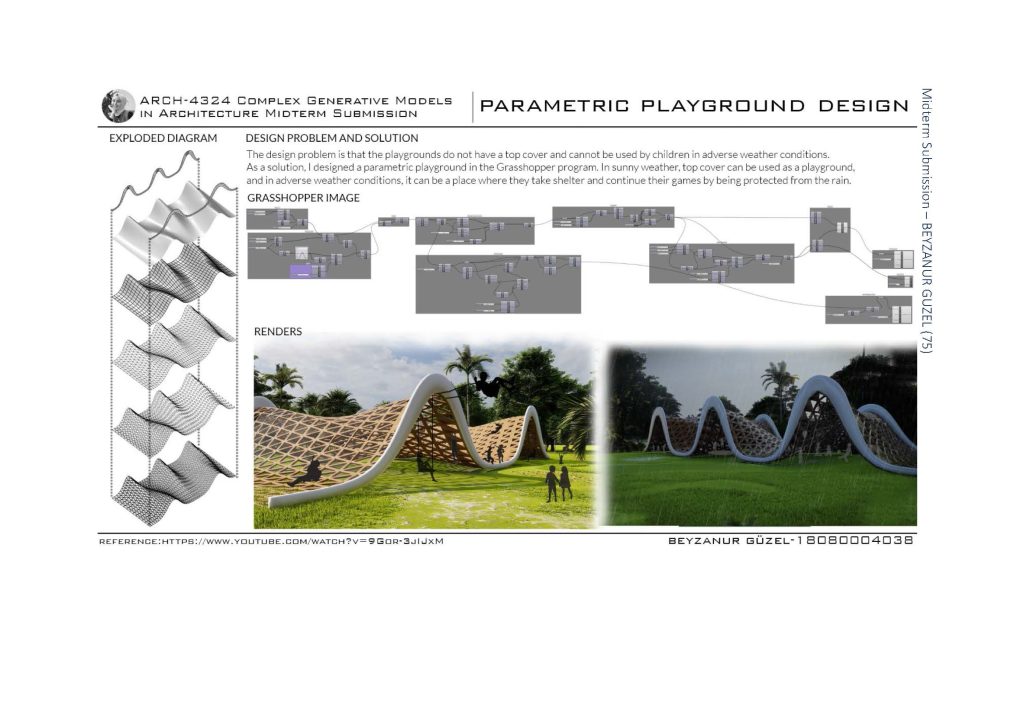
The course aims to develop; a basic understanding of generative systems, at the same time developing fundamental computational knowledge and skills that helps in generative design applications; the ability to integrate generative design approaches in architectural design project by algorithmic methods and tools; the ability to develop an generative system which response to the external inputs. This course presents generative systems and how to apply them in architectural design problems. The students are to develop generative model that response external inputs.
The process of the course is as follows:
Assignment 1| Design Rule – Build your own design rule, apply it to 2 different initial geometries and represent them by using Rhinoceros.
Assignment 2 | Flowchart Development: Develop a Grasshopper Definition by using the flowchart that you created.
Assignment 3 | Parametric Furniture Design: Create your own parametric furniture design by using Grasshopper. You are free to select the type of furniture. (You may create a bench, a table, a chair etc.)
Assignment 4 | Rotating Tower: Create your own Rotating Tower (also known as Twisting Tower) design by using Grasshopper.
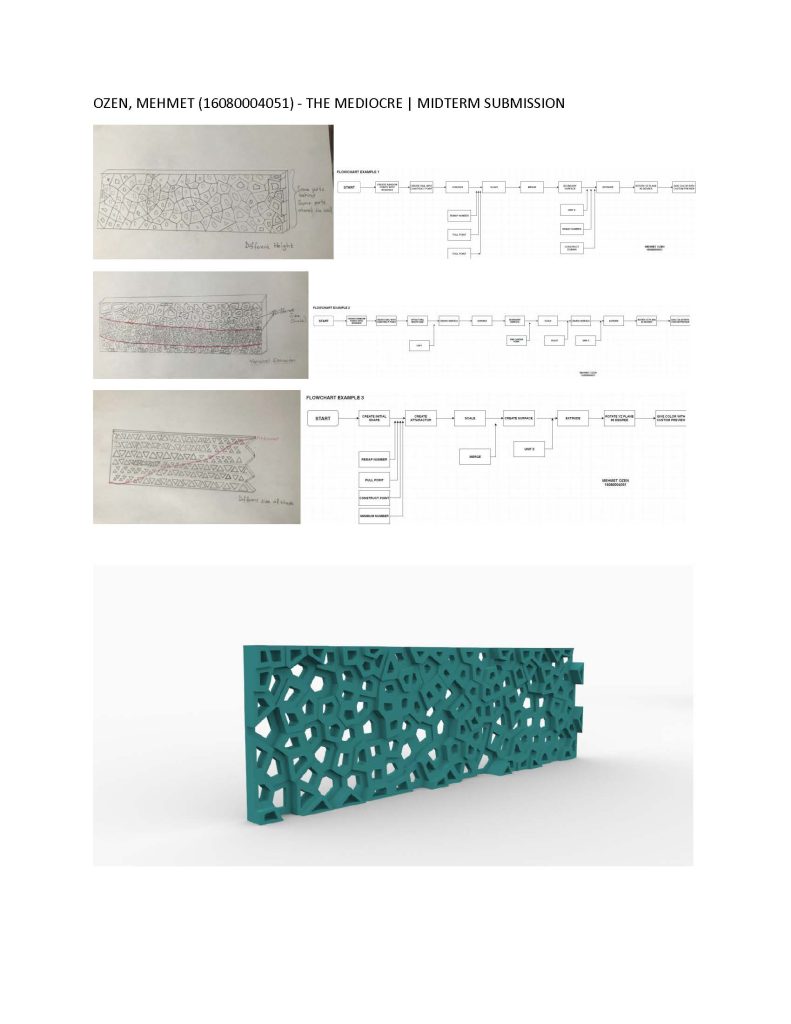
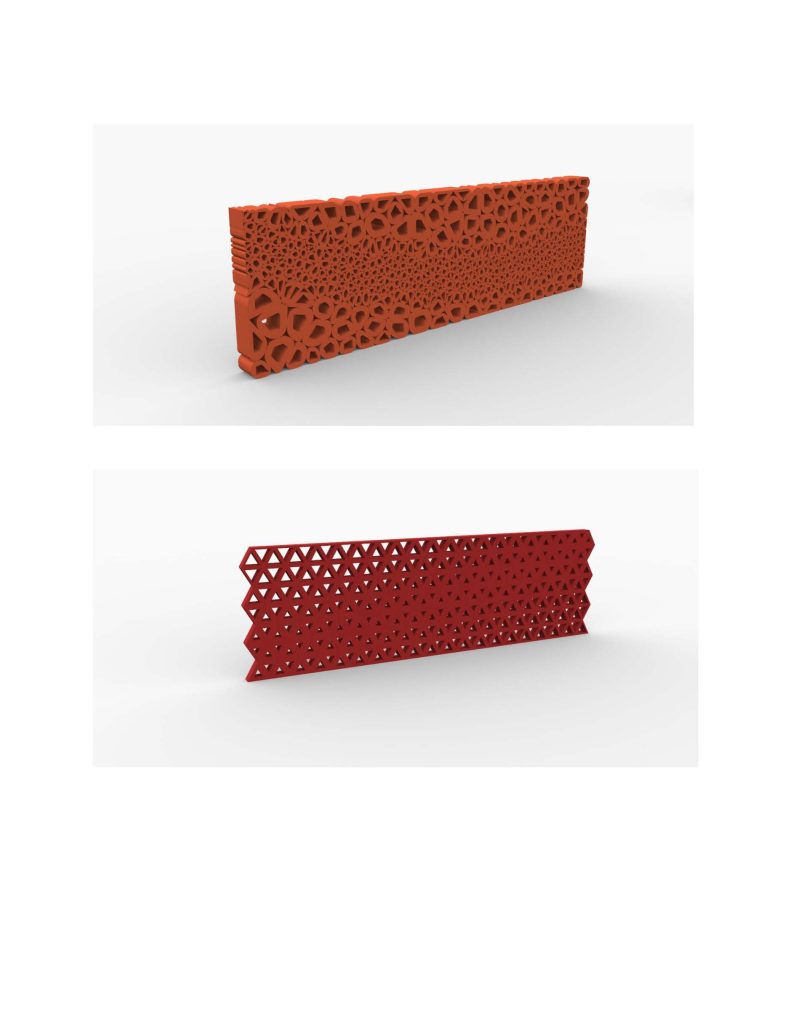
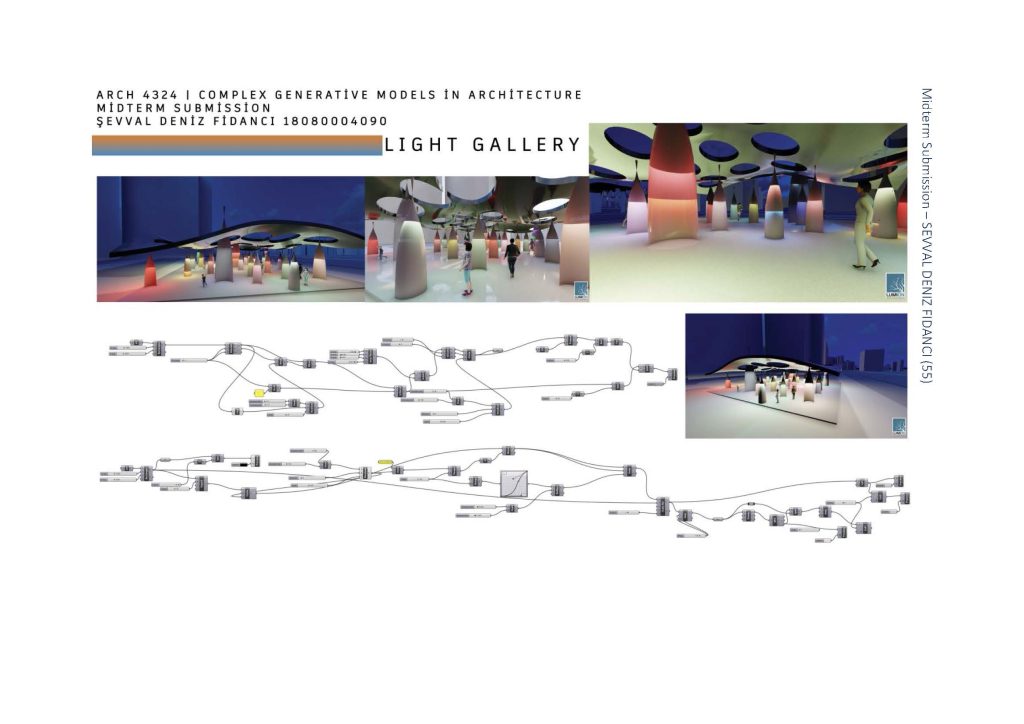
MIDTERM SUBMISSION: Create your own Wall Designs by using Grasshopper.
Assignment 5 | Physics Simulation: Create your own Structural Shell Design by using Grasshopper.
Assignment 6 | Environmental Analysis: Create a simple single-storey building and analyze its daylight performance by using DIVA 4 for Grasshopper.
Assignment 7 | Evolutionary Optimization: Create an optimization process in Grasshopper by Using Octopus.
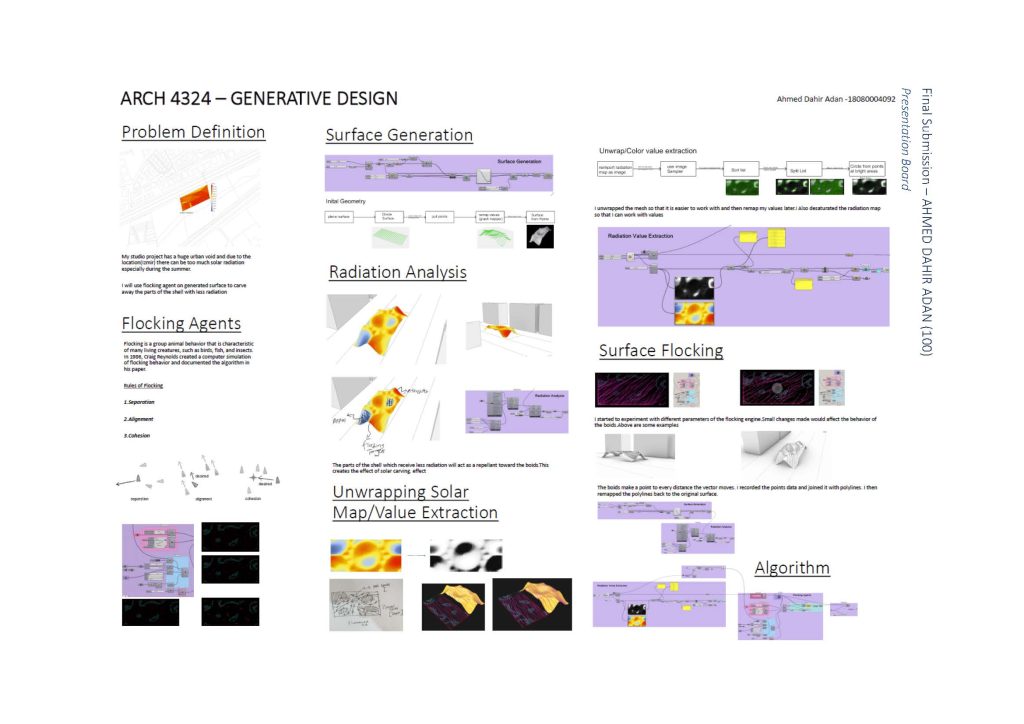
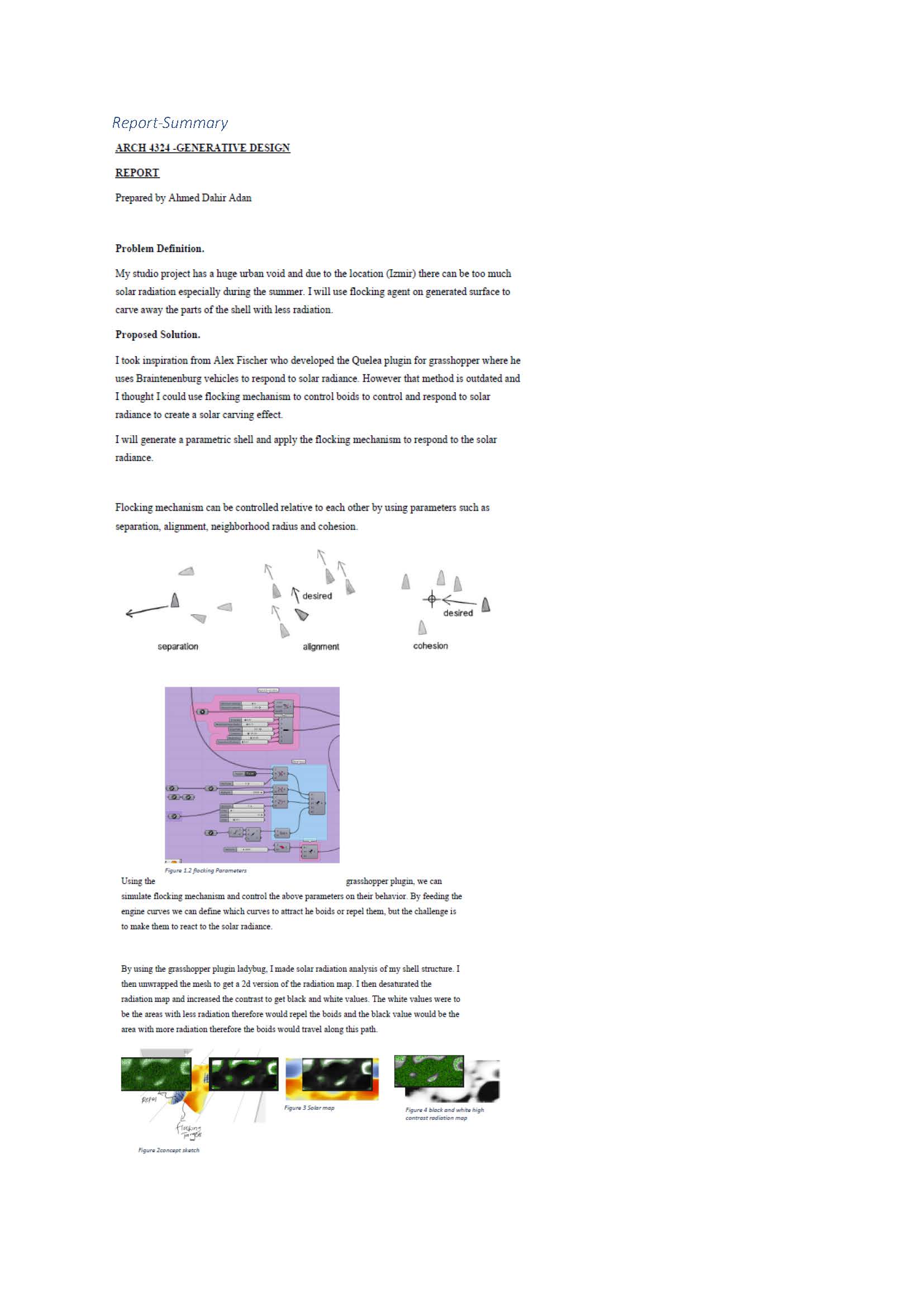
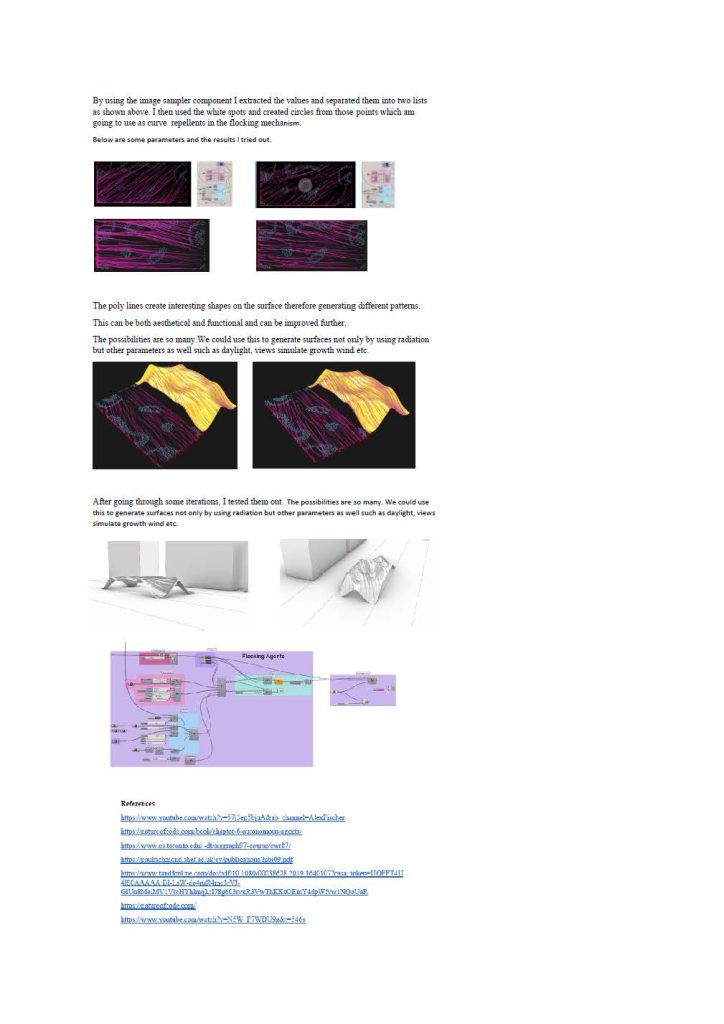
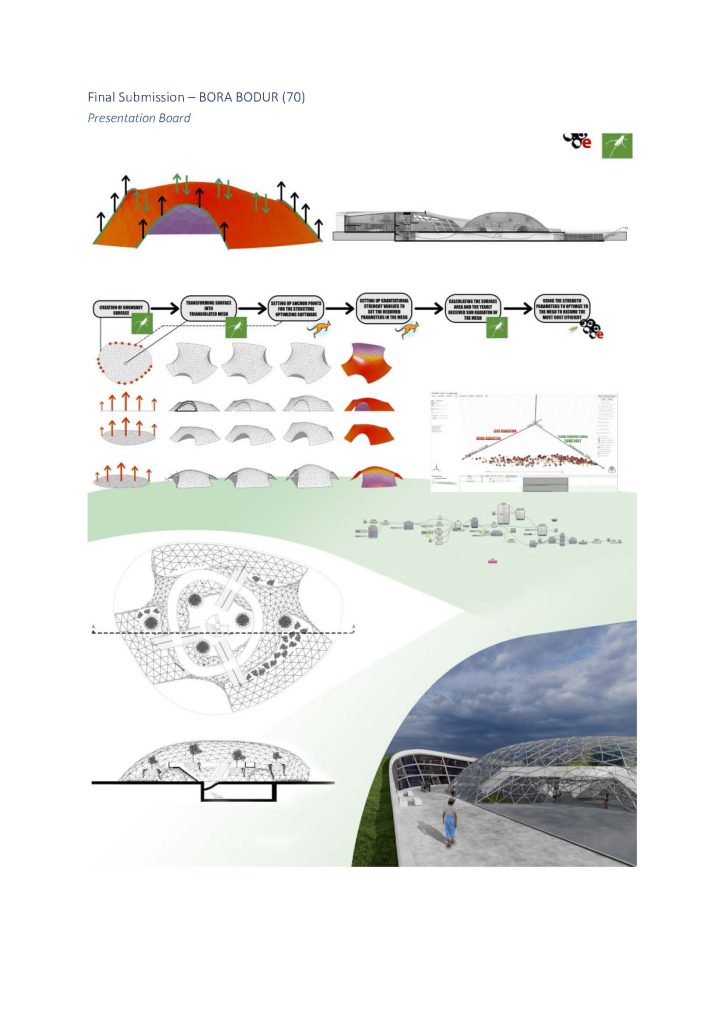
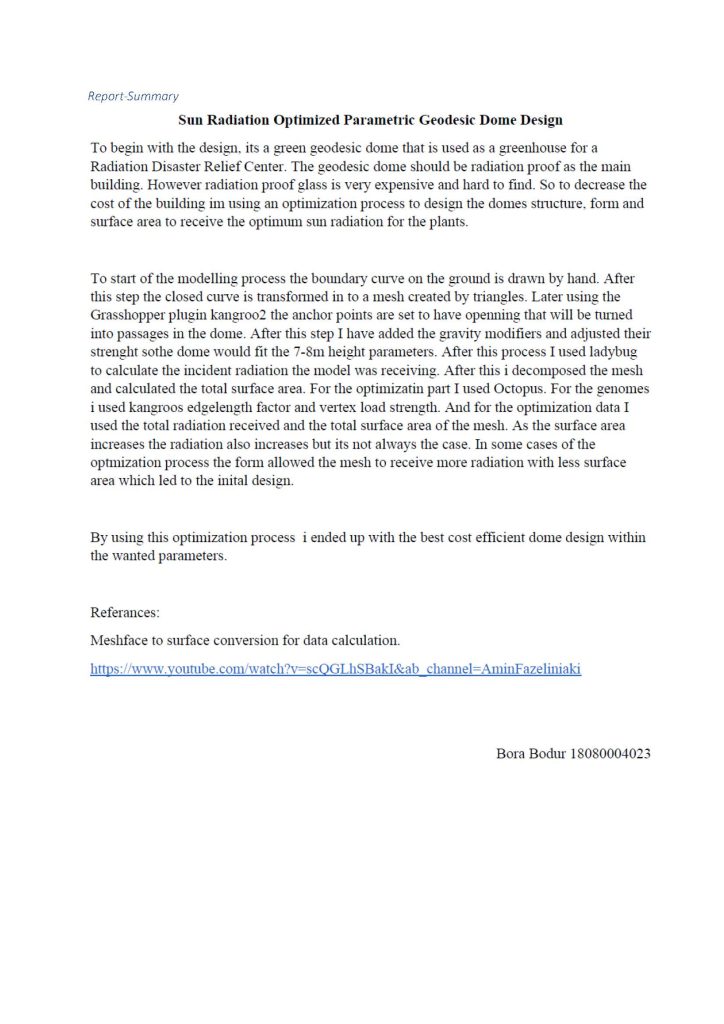
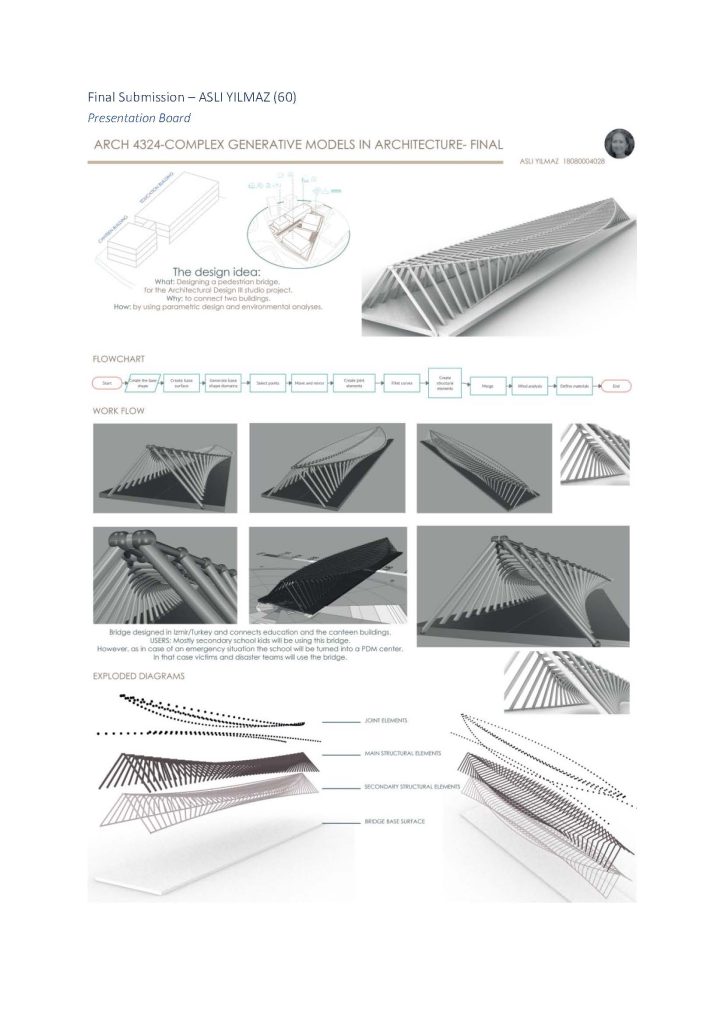
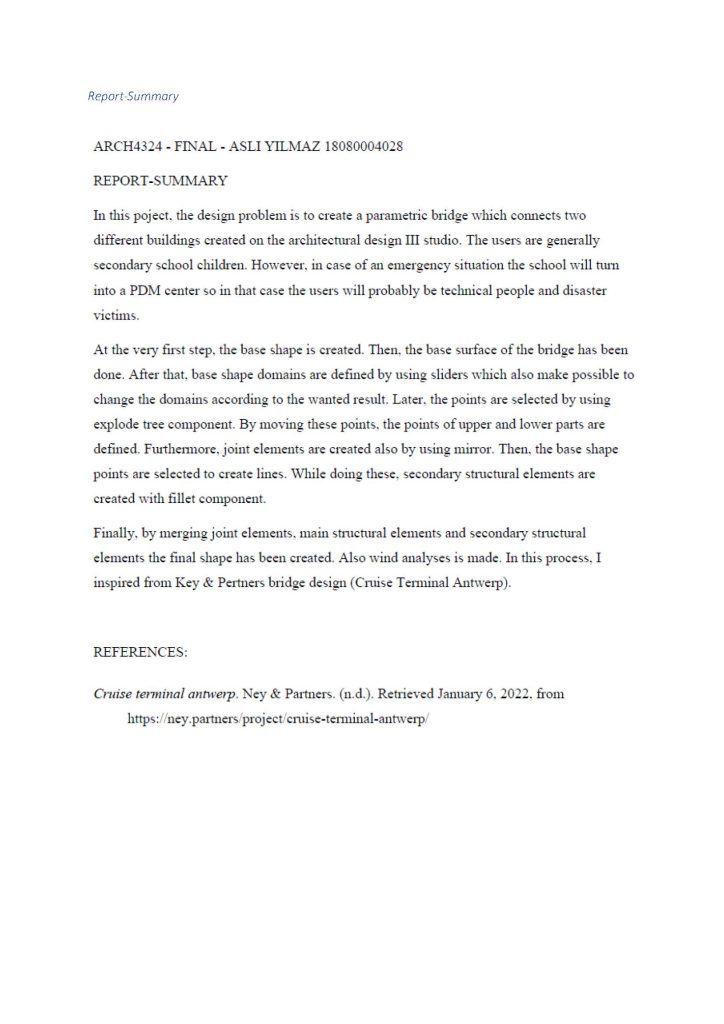
FINAL SUBMISSION: Develop a generative workflow to create multiple design alternatives for a design problem that is defined by you.